
6101 Aluminum Busbar High Conductivity for EV Charging and Renewable Power Systems
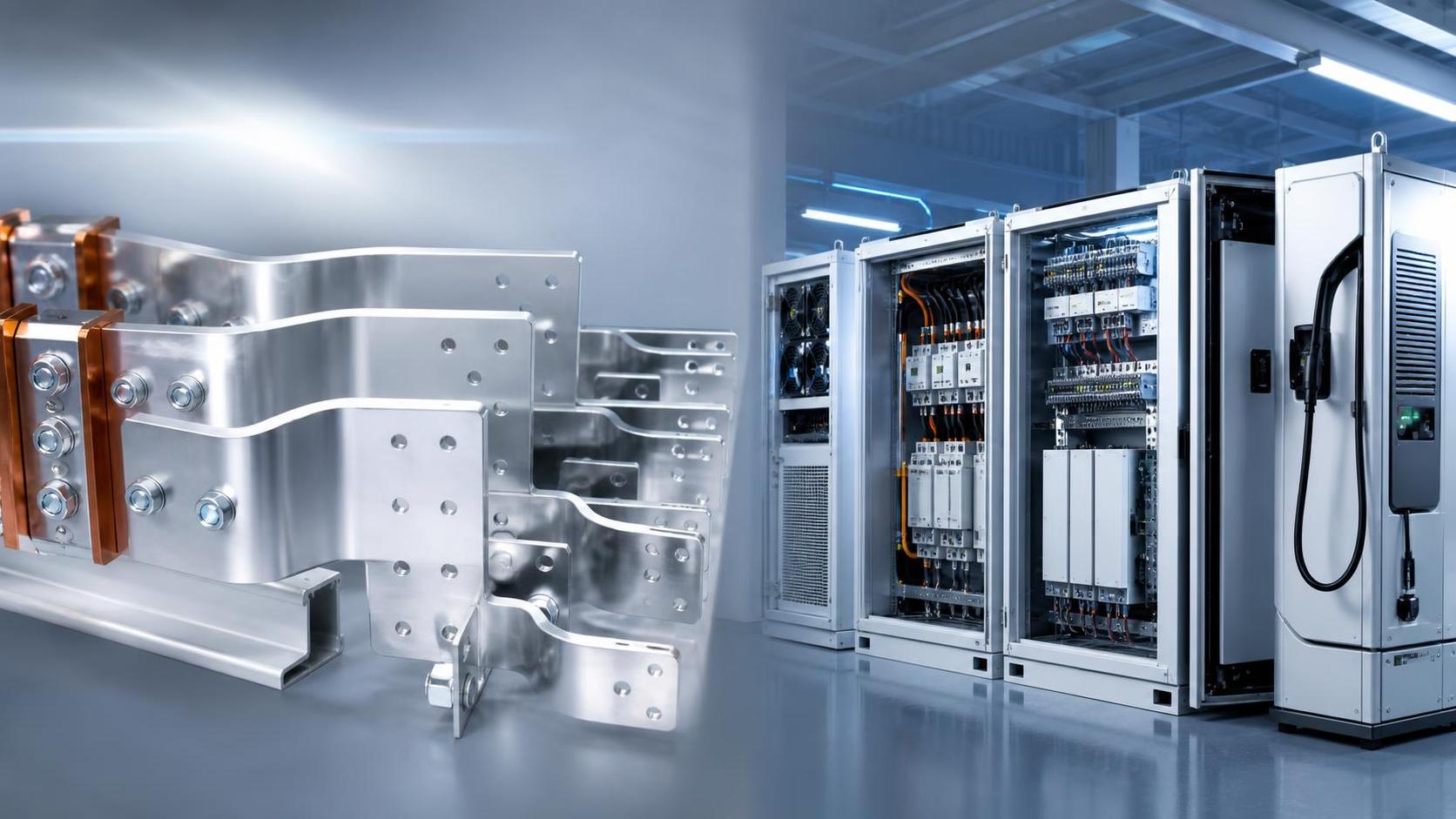
In EV charging cabinets, inverter skids, combiner sections, and battery-connected distribution assemblies, conductor choice affects far more than ampacity on paper. A busbar must stay dimensionally stable during fabrication, tolerate repeated thermal cycling, and keep contact resistance under control at every joint. That is why 6101 aluminum busbar high conductivity is often selected when the design needs a lighter conductor than copper without giving up reliable electrical performance.
For renewable power systems, the operating environment is rarely uniform. Outdoor charging infrastructure may face moisture, airborne contaminants, and temperature swings, while indoor energy storage or converter rooms can generate concentrated heat around terminals and switching equipment. In these conditions, 6101 aluminum is valued for a practical combination of conductivity, corrosion resistance, and manageable weight. The lower mass can simplify lifting, routing, and support design, especially when long bar sections are installed inside large enclosures or modular power units.
Where 6101 Fits in Real Power Assemblies
6101 is commonly considered when the busbar is expected to carry substantial current across short or medium internal distribution paths. Typical examples include AC input sections for fast chargers, DC link connections, renewable inverter output cabinets, transformer-side distribution, and interconnection bars inside energy storage power conversion systems. In these assemblies, the material needs to support tight dimensional control after cutting, punching, drilling, and bending, because even small deviations at the hole pattern or mating surface can create uneven clamping pressure and localized heating.
The conductivity advantage of 6101 becomes most useful when the design team wants aluminum to remain electrically efficient while still retaining sufficient mechanical integrity for formed busbar geometries. It is not enough to compare only nominal conductivity values. Joint design, surface preparation, bolt load, plating requirements if specified, and enclosure ventilation often determine whether the installed assembly performs as expected.
Common Specification Mistakes
A frequent misjudgment is treating all aluminum busbars as interchangeable. In practice, alloy selection should follow the electrical duty, forming complexity, and service environment. If the project includes general conductive parts in less demanding distribution or equipment layouts, a material such as 6063 aluminum busbar may be considered where easier machining, balanced corrosion resistance, and practical installation matter more than the higher-conductivity focus associated with 6101. Confusing these use cases too early can lead to unnecessary cost, fabrication difficulty, or conservative oversizing.
Another problem appears at the connection interface. Aluminum busbars do not fail simply because the base material is unsuitable; many issues start at the joint. Oxide film, poor flatness, mixed-metal contact without the right interface treatment, or under-controlled torque can all increase resistance. In EV charging and renewable installations, where current loading may fluctuate sharply, those small connection defects can become persistent hot spots.
Fabrication and Installation Points That Matter
- Hole spacing should reflect real assembly tolerance, not only the nominal drawing. Misalignment at stacked joints often forces mechanical stress into the bar before energization.
- Bend radius needs to match the alloy temper and bar thickness. An aggressive bend may save space in the cabinet but can introduce cracking risk or distortion around nearby holes.
- Contact areas should remain clean and flat until final assembly. Scratches, burrs, and embedded debris reduce the quality of the electrical interface.
- Support spacing must account for both weight and electromagnetic force under fault conditions if that scenario applies to the system design.
Transport and site handling also deserve attention. Long aluminum bars can arrive in good condition yet lose usable flatness after careless stacking, strap pressure, or impact at the ends. For this reason, packaging, separator materials, and unloading method should be aligned with the bar length and finish requirement before shipment starts, not after deformation is found on site.
Procurement and Release Risk
Many release delays come from late clarification of details that should have been frozen with the technical package: alloy grade, temper, cross-section tolerance, hole location tolerance, surface condition, identification method, and whether the bars will be supplied as raw lengths or deep-processed parts. If these points remain vague, comparison between suppliers becomes unreliable, and incoming inspection turns into guesswork.
In high-current aluminum systems, the busbar should be treated as a manufactured electrical component rather than a simple metal strip. When 6101 aluminum busbar high conductivity is matched with sound joint design, controlled fabrication, and realistic installation tolerances, it suits EV charging and renewable power equipment where weight, conductivity, and service durability must stay in balance.
Navigation
Send Us A Message
Professional field of aluminum bars
24/7 before-sales and after-sales services
Comprehensive technical support