
2026 Market Outlook for Chinese Electrical Aluminum Busbar
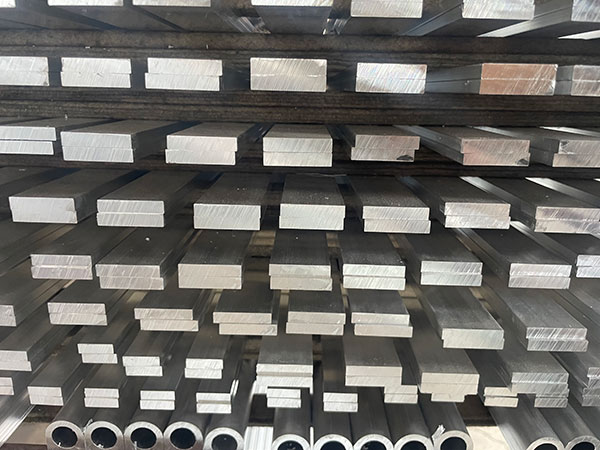
As electrification projects expand across grids, transport and industrial systems, the 2026 outlook for Chinese electrical aluminum busbar is drawing closer attention. The market is no longer driven by volume alone. Buyers are weighing material stability, processing precision, logistics reliability and lifecycle cost with far more discipline.
What the market is really signaling
Chinese electrical aluminum busbar demand is rising with new energy installations, building upgrades and equipment localization. At the same time, competition is shifting toward supply consistency, compliance and application-specific customization rather than simple price comparison.
That matters because busbar performance affects conductivity, thermal control, installation efficiency and maintenance risk. In practical terms, poor dimensional accuracy or unstable alloy quality can create hidden costs long after procurement is finished.
Why aluminum remains a strong option
In many standard power transmission and distribution applications, aluminum remains attractive for its balance of weight, corrosion resistance and overall economy. It supports easier handling and installation, which is especially useful in large projects with tight delivery schedules.
A useful example is 6063 aluminum busbar. For power distribution cabinets, electronic equipment and building infrastructure, it offers good conductivity, favorable thermal transfer and easy machining for cutting, drilling and bending.
Production capability will shape supplier selection
In 2026, sourcing decisions will increasingly favor manufacturers that combine raw material control with precision extrusion, smelting, casting and inspection. That reduces variation between batches and improves fit for rail transit, automation lines, refrigeration systems and industrial control electronics.
Shandong Jinhao Aluminum reflects this direction. Its integrated R&D, production, sales and after-sales structure, together with standardized quality control and deep-processing capability, aligns with a market that values dependable execution as much as product specification.
Key checkpoints for evaluation
- Verify alloy suitability for the electrical load and installation environment.
- Check machining tolerance, surface quality and corrosion resistance.
- Review customization support, lead time and logistics responsiveness.
- Compare lifecycle value, not only initial unit price.
How to read the next move
The Chinese electrical aluminum busbar market in 2026 will reward clear specification matching and disciplined supplier review. A sensible next step is to map actual application scenarios, define conductivity and processing requirements, then compare whether a standard option such as 6063 fits the project without unnecessary over-specification.
Navigation
Send Us A Message
Professional field of aluminum bars
24/7 before-sales and after-sales services
Comprehensive technical support