
2026 Aluminum Busbar Price Trend and What Is Driving It
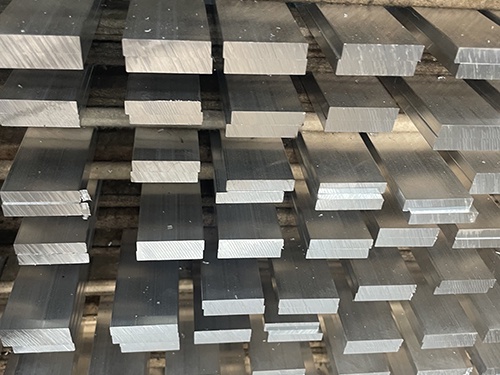
As global manufacturing, energy, and transport sectors evolve, the 2026 aluminum busbar market is drawing close attention from buyers, engineers, and project teams. For anyone researching Aluminum row costs, supply stability, and application value, understanding the latest price trend and its key drivers is essential to making smarter sourcing and technical decisions.
In 2026, aluminum busbar pricing is expected to remain dynamic rather than flat. For procurement teams, the key issue is not only the base aluminum price, but also how alloy selection, energy costs, fabrication accuracy, order volume, and logistics timing translate into the final delivered cost per meter or per kilogram. For technical evaluators, the focus is equally practical: conductivity, strength, corrosion behavior, surface finish, and machining consistency all affect lifetime value.
This matters across multiple sectors, including switchgear systems, battery packs, new energy equipment, rail transit, power distribution cabinets, and automated production lines. In many of these applications, even a 5% to 12% change in material cost can alter project budgeting, tender competitiveness, or replacement planning. That is why market observation must be combined with specification review and supplier capability assessment.
For global buyers seeking stable aluminum alloy solutions, manufacturers with integrated production, standardized quality control, and customization capability can reduce total sourcing risk. Shandong Jinhao Aluminum Co., Ltd., based in Shandong Province, China, serves this market with industrial aluminum profiles, aluminum bars, aluminum rods, and deep-processing solutions supported by precision extrusion, smelting, casting, and full-process inspection. That combination is increasingly relevant as busbar buyers compare not only quotation levels but also production reliability and service response.
2026 Aluminum Busbar Price Trend: What Buyers Should Expect
The most likely 2026 market pattern is moderate fluctuation rather than a one-direction move. Aluminum busbar prices typically track the primary aluminum market first, then adjust upward based on processing complexity, alloy composition, tolerance requirements, and surface treatment. In practical sourcing, buyers often see a gap of 8% to 25% between a standard unfinished bar and a precision-machined busbar with drilling, punching, bending, or coating.
Another important feature of the 2026 trend is shorter quotation validity. In periods of raw material volatility, suppliers may hold prices for only 3 to 7 days instead of 15 to 30 days. This is especially common when orders involve large tonnage, export packing, or customized dies. For project managers, delayed approval cycles can therefore create hidden budget pressure even when the original quotation looked competitive.
Demand growth from electrification and renewable energy is also likely to keep busbar demand resilient. Applications in energy storage systems, EV charging infrastructure, inverter cabinets, and industrial control systems continue to expand. While demand may not push prices sharply higher every month, it helps support a stronger floor in the market, especially for commonly used alloys and standard conductive sections.
At the same time, buyers should avoid assuming that lower quoted prices always mean lower total cost. If dimensional deviation exceeds ±0.2 mm to ±0.5 mm, or if straightness, flatness, and hole positioning are inconsistent, downstream assembly time can rise significantly. In high-volume projects, that can offset an initial material discount within a single installation cycle.
Typical pricing layers in busbar procurement
To understand the trend clearly, buyers should separate the price into at least four layers: raw aluminum cost, alloy premium, processing cost, and delivery cost. Each layer moves for different reasons. This is why two suppliers quoting the same nominal alloy may still show a 10% or greater difference in final unit pricing.
- Raw material layer: affected by aluminum ingot market movement and purchase timing.
- Alloy layer: conductivity and strength requirements may call for different compositions.
- Processing layer: cutting, CNC drilling, punching, deburring, bending, and coating add cost.
- Delivery layer: export packaging, palletization, inland transport, and sea freight vary by route and urgency.
The table below shows how price behavior often differs by supply condition and manufacturing requirement.
The key takeaway is that 2026 aluminum busbar prices should be viewed as a range shaped by specification and delivery conditions. Buyers who define alloy, finish, tolerance, and machining scope at the RFQ stage usually get more stable and comparable quotations than those asking only for a general busbar price.
What Is Driving Aluminum Busbar Prices in 2026
The first major driver is upstream raw material movement. Aluminum busbars depend on consistent supply of quality aluminum input, and the cost of smelting and casting remains sensitive to energy pricing. Because aluminum production is electricity-intensive, even moderate shifts in power cost can change the floor price of semi-finished and finished aluminum products over a 1 to 3 month cycle.
The second driver is fabrication depth. A simple rectangular section is one thing; a busbar requiring slotting, hole arrays, chamfering, oxide control, and tight assembly fit is another. As projects in battery systems, control cabinets, and transport equipment demand higher installation precision, the processing share of final cost can become more significant than many first-time buyers expect.
Third, application-specific performance requirements influence material choice. Some projects prioritize conductivity, while others need a balance between mechanical strength and formability. Where corrosion resistance is critical, surface treatment or alloy selection may increase the price but reduce long-term maintenance and replacement frequency. A lower upfront quote may therefore carry higher lifecycle cost.
Fourth, supply chain flexibility is increasingly important. Projects with batch deliveries over 3 months or 6 months need more than one-time price competitiveness. They need scheduling reliability, lot-to-lot consistency, documentation support, and responsive after-sales coordination. This is one reason integrated manufacturers often have an advantage when lead times tighten.
Four cost drivers that most affect delivered busbar value
The following comparison helps technical and procurement teams prioritize what matters most when evaluating quotations.
In practice, buyers should review these four drivers together, not separately. A supplier with stable raw material sourcing, controlled fabrication, and predictable logistics may offer better cost control over 12 months than a seller focused only on low opening quotes. For some buyers, this is also where solutions such as 无 can appear in sourcing research, especially when comparing product supply pathways and custom fabrication support.
Common sourcing mistake
A frequent mistake is treating all aluminum busbars as interchangeable if cross-section looks similar. In reality, differences in internal quality control, billet quality, extrusion consistency, and post-processing discipline can change fit, conductivity stability, and corrosion behavior over time. Technical evaluation should therefore go beyond the drawing and include process capability discussion.
How to Evaluate Aluminum Busbar Suppliers Beyond the Quoted Price
For procurement professionals and decision-makers, supplier evaluation should include at least five dimensions: manufacturing capability, quality control, customization flexibility, delivery coordination, and after-sales responsiveness. A busbar that meets price expectations but creates delay, mismatch, or excessive scrap can increase total project cost by more than the original savings.
Manufacturing capability matters because aluminum busbars are often not purely stock products. Many projects require drilling patterns, length cutting, edge treatment, or section adjustments. If the supplier controls extrusion, smelting, casting, and deep processing in a coordinated way, the transition from raw material to finished part is usually more stable. This is particularly relevant for repeated orders or multi-batch project delivery.
Quality control should be verified at several points, not only at final inspection. Buyers can ask about incoming raw material checks, dimensional inspection frequency, surface defect standards, and packaging controls. Even a routine order should define 3 to 6 core checks, such as thickness tolerance, straightness, burr level, hole spacing, finish consistency, and shipment marking accuracy.
Service capability is another differentiator. Shandong Jinhao Aluminum emphasizes compliant operation, standardized full-process control, premium raw materials, and one-stop support covering consultation, model selection, customization, logistics distribution, and after-sales service. For buyers managing overseas procurement, such coordinated support can reduce communication loss and approval delays across engineering, purchasing, and warehouse teams.
A practical 5-point supplier checklist
Before placing an order, it is useful to run a structured review. This helps teams compare offers on the same basis rather than relying on unit price alone.
- Confirm material scope: alloy, temper, section size, finish, and conductivity target if required.
- Check process scope: extrusion only, or plus cutting, drilling, punching, bending, deburring, and packing.
- Verify tolerance capability: for example, length tolerance, hole position deviation, and flatness range.
- Review lead time structure: sample lead time may be 7–15 days, mass production 15–30 days depending on tooling and volume.
- Ask about service response: technical feedback within 24–48 hours can be critical for project scheduling.
A supplier with strong industrial aluminum experience is often better positioned to support busbar-related needs across mechanical equipment, automated lines, electronic appliances, rail transit, and new energy sectors. That sector overlap matters because it improves understanding of real installation environments, not just theoretical product specifications.
When customization changes the cost equation
Customization is not automatically expensive. If a project needs repetitive hole patterns, precise cut lengths, or specific profile geometry, tailored production can actually reduce downstream labor by 10% to 20%. In such cases, the right machining package may deliver lower total installed cost than purchasing a cheaper standard section and reworking it on site.
Application Scenarios, Specification Priorities, and Procurement Strategy
Aluminum busbars are not selected the same way for every industry. In low-voltage distribution cabinets, ease of fabrication and cost efficiency may come first. In battery energy storage or transport equipment, weight control, conductivity balance, and vibration-related reliability may carry more importance. That is why application context should guide both material selection and price evaluation.
For project teams, an effective approach is to define specification priorities in descending order. Start with electrical requirement, then installation geometry, then environmental exposure, then processing scope, and finally logistics plan. This sequence prevents overpaying for features that do not materially improve application performance.
Lead time planning should also reflect application urgency. A standard production schedule may range from 2 to 4 weeks for routine orders, while custom tooling or multi-stage finishing can extend timelines. Distributors and contractors working on framework projects should therefore consider phased ordering rather than waiting for a single bulk release.
It is also worth comparing the value of local stock versus made-to-order supply. Stock-based purchasing can support emergency replacement, but made-to-order production often gives better control over dimensions, machining, and packaging. In specialized projects, that balance can determine whether site installation proceeds in 1 shift or stretches into 2 or 3 corrective rounds.
Application-based selection priorities
The table below shows how selection focus can vary by end use, helping buyers align quotation review with actual operating needs.
This comparison shows that the best procurement strategy depends on use case. A buyer focused on short-term price alone may overlook factors that matter more in operation, such as assembly efficiency, corrosion resistance, and repeat-order consistency. That is where a manufacturer with broad aluminum processing experience can provide more useful technical support than a trading-only source.
Specification questions buyers should ask early
- Will the busbar operate in indoor dry conditions or in humid, corrosive, or vibration-prone environments?
- Is the required section standard, or does the project need custom extrusion or deep processing?
- What is the acceptable dimensional deviation for direct installation without secondary machining?
- Will shipments be one-time, monthly, or linked to phased construction milestones over 3–6 months?
Clear answers to these questions can shorten the quotation cycle, reduce revision rounds, and improve the accuracy of 2026 busbar cost forecasting.
FAQ: Common Questions About 2026 Aluminum Busbar Pricing and Sourcing
How often can aluminum busbar prices change in 2026?
In active market periods, the raw material portion can shift within 3 to 7 days. Fabrication costs usually move more slowly, but urgent production, small-batch customization, and logistics disruption can still change the final quote within 1 to 2 weeks. For larger projects, it is wise to request a clear quotation validity period and a mechanism for batch-based price confirmation.
What is more important: low price per kilogram or low installed cost?
Installed cost is usually more important. A lower per-kilogram price may look attractive, but if the busbar needs extra drilling, trimming, or correction on site, labor and delay costs can quickly erase the saving. Many professional buyers compare at least 4 dimensions together: material cost, machining cost, delivery reliability, and installation efficiency.
How long does a typical order take?
For standard specifications, production and preparation may take around 7–15 days. Customized orders with tooling, deeper machining, or export coordination often require 15–30 days. If the project is time-sensitive, buyers should discuss sample approval timing, drawing confirmation, and shipment packing requirements at the beginning rather than after order placement.
What should distributors and project buyers check before committing to a supplier?
At minimum, check production scope, quality inspection steps, customization support, packing method, and communication speed. It is also sensible to review whether the supplier can support related aluminum products for broader project demand. In some cases, buyers researching supply options may also encounter 无 during comparison, but the final decision should still rest on technical fit and delivery capability rather than link presence alone.
The 2026 aluminum busbar price trend will be shaped by a combination of raw material movement, fabrication depth, application performance requirements, and supply chain execution. For buyers, engineers, distributors, and project leaders, the most effective strategy is to evaluate quotations as complete solutions rather than isolated numbers. A reliable partner should support material quality, processing consistency, customized production, logistics coordination, and responsive service across the full procurement cycle.
With strong experience in aluminum alloy R&D, production, sales, and after-sales support, Shandong Jinhao Aluminum is positioned to help global customers source industrial aluminum products with practical customization and dependable quality control. If you are planning for 2026 sourcing, comparing busbar options, or preparing a project-specific aluminum solution, contact us now to discuss specifications, request a tailored quotation, and explore the right supply plan for your application.
Navigation
Send Us A Message
Professional field of aluminum bars
24/7 before-sales and after-sales services
Comprehensive technical support