
EU Imposes Final Anti-Dumping Duties on Certain Chinese Aluminum
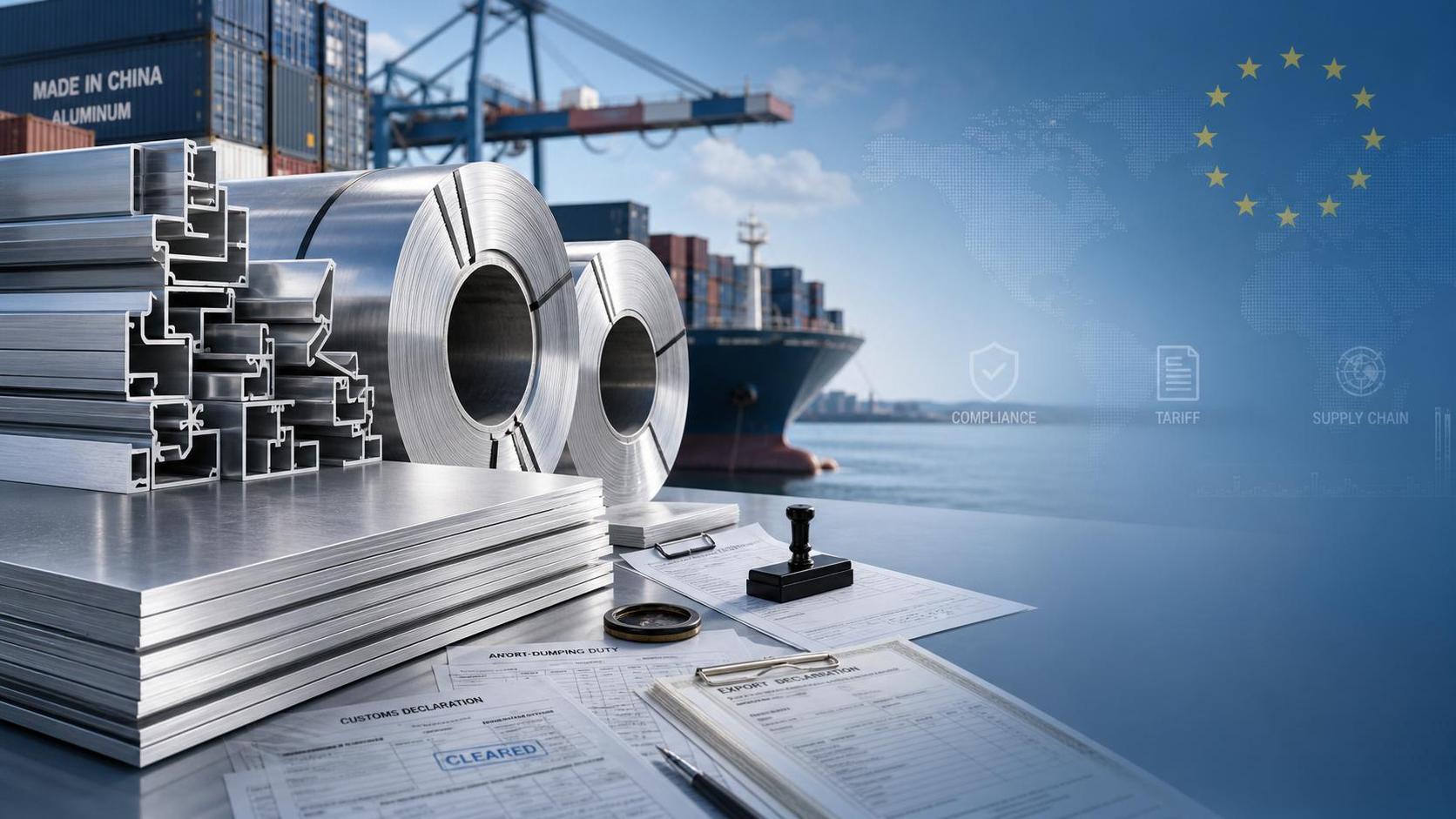
On July 1, 2026, the European Commission formally put final anti-dumping duties in place for certain aluminum products originating in China, covering selected unwrought aluminum, aluminum bars, rods, profiles, plates, sheets, strip, foil, tubes and pipes under CN codes 7601–7604 and 7606–7608. For exporters selling into Europe, this is not just a tariff update: it directly affects pricing to EU customers, customs documentation, and the lead time needed for compliance preparation, making it a practical issue for traders, processors, logistics teams, and procurement functions across the aluminum supply chain.
What the measure now covers
According to the European Commission announcement, the final anti-dumping duties take effect from July 1, 2026 and apply to certain aluminum products originating in China within the stated CN code ranges. The duty rates range from 18.2% to 32.6%. The measure applies to companies that do not have an accepted price undertaking or that did not obtain an exemption through individual examination. The information provided also indicates a direct impact on export pricing to the EU, customs clearance documentation, and compliance certification preparation cycles.
Where the pressure is likely to appear first
Quoting and contract decisions for exporters
From an industry perspective, Chinese aluminum exporters are the first group likely to feel the effect because duty costs can alter the structure of offers made to European customers. The immediate pressure point is commercial quoting: companies may need to recheck how prices are presented, which products fall within the covered CN codes, and how delivery commitments align with the new cost environment.
Import handling and documentation at the border
Observably, customs-facing teams and supply chain service providers may also be affected because the measure raises the importance of accurate product classification and complete import documentation. The practical issue is not only the duty itself, but whether shipment files, declarations, and supporting materials are prepared in a way that avoids clearance delays or disputes over product scope.
Processing and downstream buyers in Europe
For processors, distributors, and buyers sourcing covered Chinese aluminum products into the EU market, the likely impact is operational rather than purely regulatory. What deserves closer attention is whether supply planning, order timing, and supplier coordination need adjustment when pricing, paperwork, and compliance preparation all become more sensitive to timing and product definition.
What companies should watch now
Check product scope against CN codes
Analysis shows that one of the most immediate tasks is to verify whether specific products fall within CN codes 7601–7604 and 7606–7608 as referenced in the announcement. This matters because commercial, customs, and compliance decisions depend on whether a shipment is inside the covered scope rather than on a broad internal label such as “aluminum materials” alone.
Rework EU pricing and customer communication
What deserves closer attention is the effect on quote validity, contract discussions, and margin assumptions for EU business. Companies dealing with European customers may need clearer internal alignment on how duty exposure is reflected in quotations and how any changes are explained in customer communication.
Prepare customs and compliance files earlier
Analysis shows that the measure should also be read as a documentation and timing issue. Since the provided information points to tighter requirements around customs files and compliance certification preparation cycles, companies may need to bring forward internal checks on shipment papers, product descriptions, and supporting compliance materials before cargo moves.
Follow official wording and any later clarification
Observably, there is also a difference between the headline announcement and day-to-day execution. Businesses should focus on how the official wording is applied in actual trade operations, especially where product scope, documentation standards, or company-specific treatment may affect routine shipments.
Why this matters beyond the headline
As an editorial observation, this development is better understood as both an immediate operating change and a policy signal. It is immediate because the duties are already stated to take effect from July 1, 2026 and have direct consequences for pricing, clearance, and compliance preparation. At the same time, it is also a signal that companies active in EU-bound aluminum trade need to treat trade remedy exposure as a continuing business variable rather than a one-off announcement.
How to read the current development
At this stage, it is more appropriate to understand the measure as a confirmed regulatory result with ongoing commercial consequences, rather than as a short-lived market fluctuation. The confirmed fact is the implementation of final anti-dumping duties on the covered product groups. The part that still requires continued observation is how companies adjust their quoting, documentation workflows, and customer coordination in response to the new requirements.
Basis of this article
This article is based on the user-provided news title, event date, and event summary concerning the European Commission’s final anti-dumping duties on certain Chinese aluminum products effective July 1, 2026. For this type of development, relevant source categories usually include official government or regulator announcements, company disclosures, industry association updates, authoritative media reporting, and standards or classification-related documents. A specific official source link was not provided in the input, so the exact reference should continue to be verified. Follow-up attention should focus on any later official clarification concerning scope, documentation practice, and implementation in day-to-day trade procedures.
Navigation
Send Us A Message
Professional field of aluminum bars
24/7 before-sales and after-sales services
Comprehensive technical support