
EU CBAM Filing Starts for Aluminum on June 23
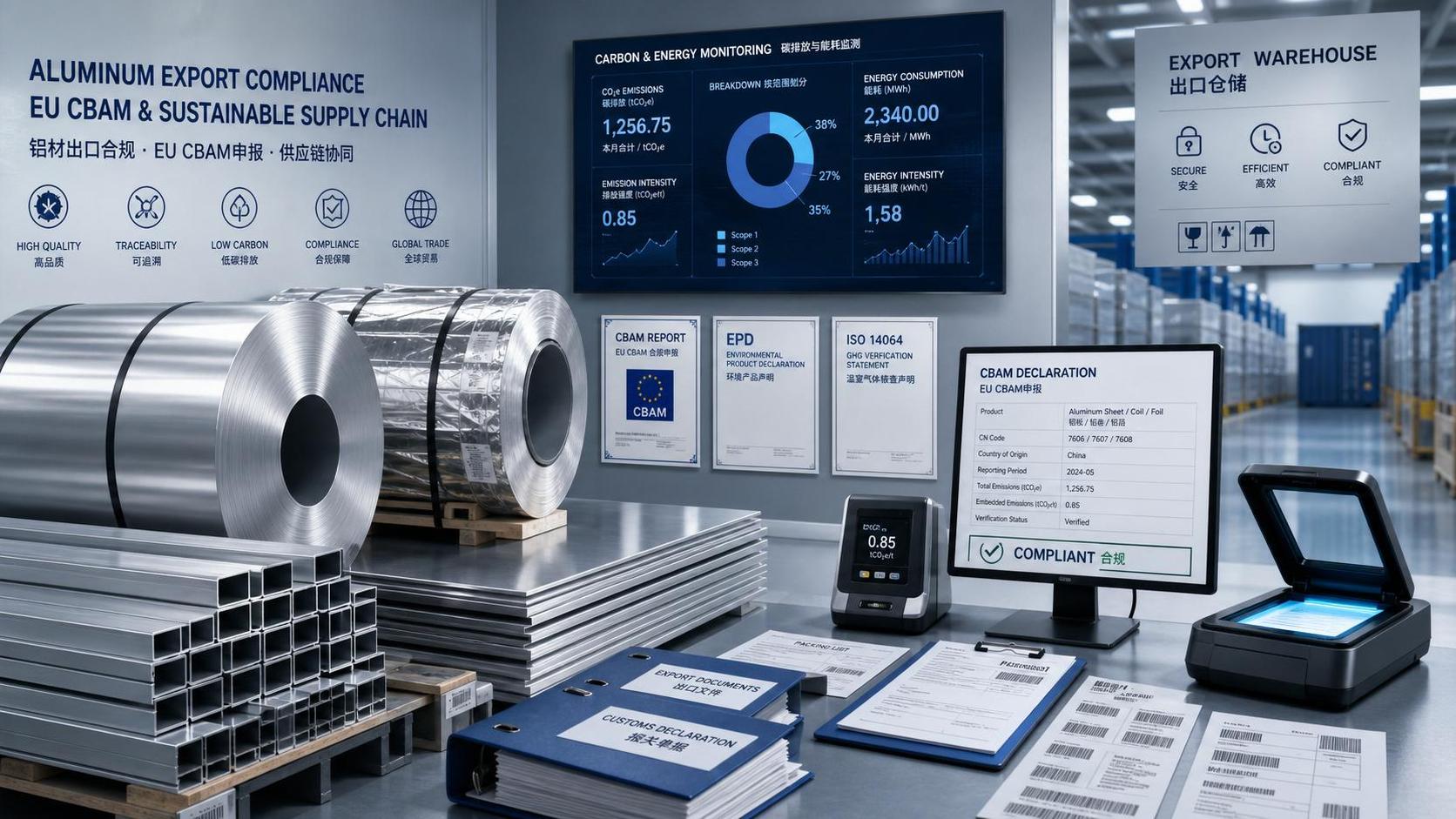
On June 23, 2026, the EU’s Carbon Border Adjustment Mechanism (CBAM) moved aluminum and aluminum products into a mandatory reporting and data-submission stage, with the first quarterly filing now underway. For suppliers shipping aluminum products to the EU, this is not just a policy update but an operational compliance change that can affect customs handling, market access, procurement coordination, and shipment readiness.
What the June 23 change confirms
According to the announcement published on the European Commission website on June 22, 2026, aluminum and related products are formally included in the CBAM transitional mandatory reporting and data-reporting phase from June 23, 2026. The first quarterly report submission has also started.
Suppliers exporting aluminum products to the EU, including aluminum profiles, sheet, strip and foil, as well as recycled aluminum products of Chinese origin, are required to submit data through the CBAM portal. The required information includes electricity and fuel consumption in production, direct emissions, and embedded carbon intensity.
The announced consequence of non-compliance is also clear in principle: failure to file in line with the requirement may affect customs clearance and eligibility for the later stage of formal taxation.
Where the immediate pressure appears in the supply chain
Export-facing suppliers now face a document and data threshold
For companies directly shipping aluminum products to the EU, the impact is likely to appear first in export preparation and filing workflows. The key change is that shipment eligibility is no longer tied only to product, contract, and logistics documentation, but also to CBAM-related production and emissions reporting. What deserves closer attention is whether internal systems can consistently collect and organize the required energy-use and emissions data in a form suitable for portal submission.
Manufacturers need closer coordination between production and trade teams
For processing and manufacturing companies, the practical issue is not limited to trade compliance. The reporting requirement reaches back into the production process, because electricity use, fuel consumption, direct emissions, and embedded carbon intensity must be reported. Analysis shows that production records, energy data, and export documentation may now need tighter alignment than before, especially where manufacturing data and sales documentation have traditionally been handled separately.
Buyers and procurement teams may recheck supplier readiness
For EU-bound procurement arrangements, buyers and sourcing teams may need to pay closer attention to whether suppliers can provide the necessary CBAM-related data on time. From an industry perspective, this may influence supplier qualification reviews, delivery planning, and document requests during order execution. The immediate issue is not a confirmed market reshuffle, but a clearer compliance checkpoint tied to continued access to EU delivery channels.
Supply chain service providers may see new coordination tasks
Logistics, customs support, and other supply chain service providers may also be affected at the execution level. Their role may increasingly involve checking whether required CBAM filings and supporting data have been prepared before shipment milestones are reached. Observably, the operational risk here is less about interpreting the policy in abstract terms and more about whether filing readiness aligns with customs and delivery timing.
What companies should review now
Check whether reporting data can be assembled reliably
Companies involved in aluminum exports to the EU should first review whether they can gather the required production electricity, fuel, direct emissions, and embedded carbon intensity data in a complete and auditable manner. Where the current process depends on fragmented records, the immediate concern is the risk of incomplete or inconsistent submission.
Revisit trade documents and internal compliance workflows
It is also worth reviewing whether export documentation procedures, internal approval steps, and shipment release processes reflect the new reporting requirement. Analysis shows that the rule change is relevant not only to sustainability or compliance teams, but also to sales, trade operations, and delivery coordination functions.
Pay attention to affected product lines and supplier communication
Companies dealing in aluminum profiles, sheet, strip, foil, and recycled aluminum products for the EU market should verify whether supplier communication, order documentation, and product-level records are sufficient for CBAM reporting. Where multiple upstream parties are involved, the practical issue may be whether carbon-related production data can be collected in time for filing.
Continue watching for implementation wording and follow-up requirements
The provided information confirms the start of mandatory reporting and the first filing cycle, but it does not provide all execution details. For that reason, companies should continue monitoring official wording, filing practice, and any further clarification that may affect submission expectations, customs coordination, or later access to the formal taxation stage.
How this development is best understood
From an industry perspective, this update is better understood as an execution signal rather than a theoretical policy discussion. The significance of the June 23 step is that CBAM requirements for aluminum are now connected to actual reporting action through the CBAM portal.
At the same time, it is more appropriate to understand this as a rule now entering practical implementation, not as a fully settled endpoint. Observably, the market still needs to watch how reporting expectations are applied in day-to-day trade, how consistently companies can produce the required data, and whether downstream commercial documents begin to reflect this compliance layer more explicitly.
Why the market should read this cautiously but seriously
The most important takeaway is not that every business consequence is already visible, but that aluminum exports to the EU now face a clearer compliance condition linked to reporting readiness. Analysis shows that the immediate pressure is likely to fall on documentation quality, internal data coordination, and the ability to support customs and delivery processes without interruption.
In that sense, this development is best read as a landed compliance change with further implementation details still worth tracking. It does not by itself confirm broader market outcomes, but it does raise the practical importance of emissions-related reporting in aluminum trade with the EU.
Basis of this article and points still to verify
This article is generated from the user-provided news title, event date, and event summary. The factual basis used here is limited to the provided description of the European Commission website announcement, the June 23, 2026 start of mandatory CBAM reporting for aluminum and aluminum products, the launch of the first quarterly report submission, the required reporting items, and the stated compliance consequence.
For developments of this type, relevant source categories typically include official announcements, regulatory publications, customs or trade authority information, industry association updates, standard-setting documents, and reporting by authoritative media. A specific official source link was not provided in the input, so the exact source document should continue to be verified.
What still requires continued observation includes implementation details, compliance interpretation, procurement and tender document changes, customs execution practice, industry feedback, and how affected companies carry out reporting in practice.
Navigation
Send Us A Message
Professional field of aluminum bars
24/7 before-sales and after-sales services
Comprehensive technical support