
EU CBAM Aluminum Rules Take Effect June 26
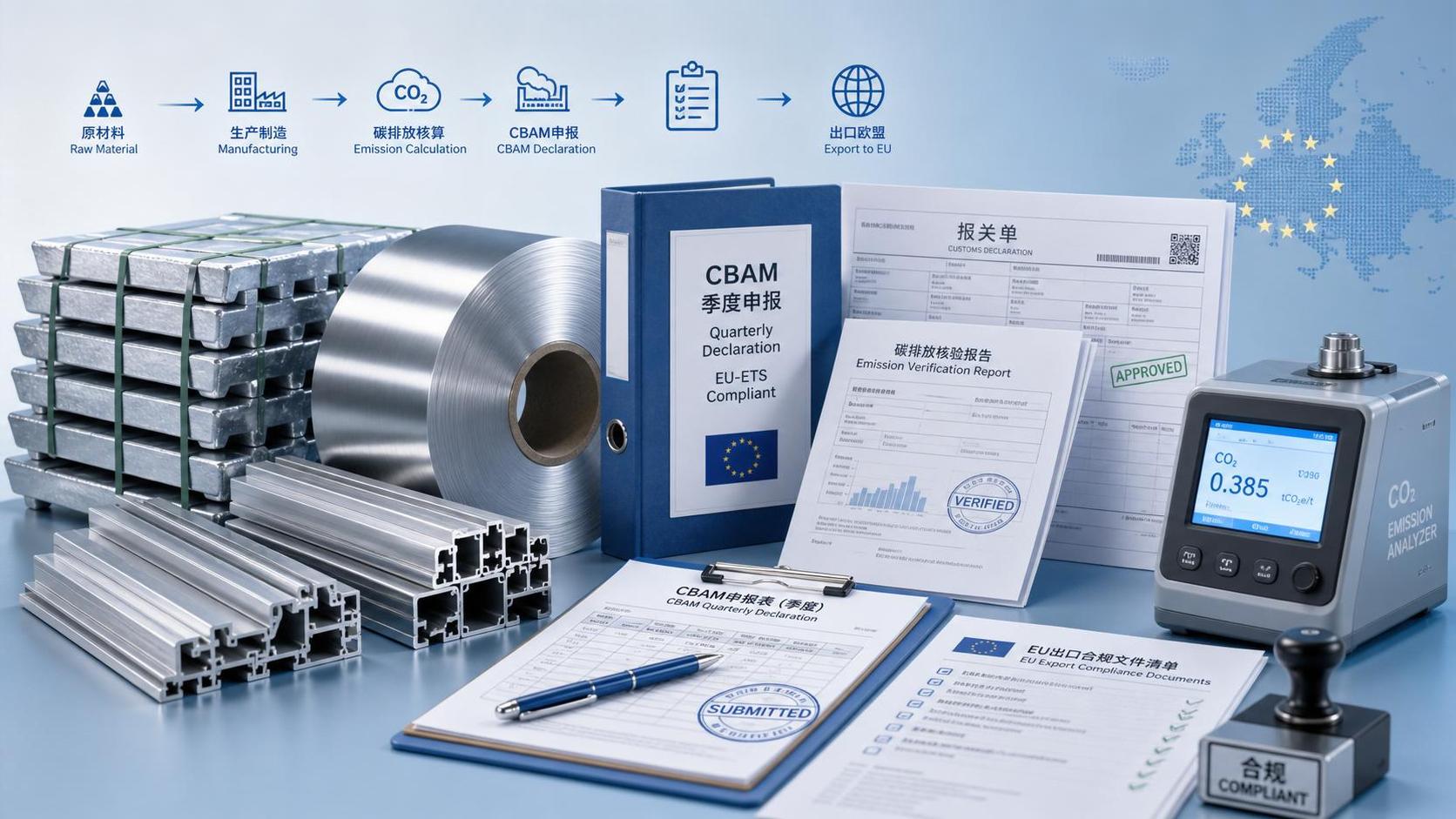
On June 26, 2026, the European Commission formally released transitional implementation rules for CBAM covering aluminum products, with quarterly carbon reporting set to begin from July 1 for Chinese suppliers exporting primary aluminum, recycled aluminum, and aluminum products to the EU. For exporters, processors, customs-facing teams, and EU-bound order managers, this is worth close attention because the new requirement reaches beyond policy wording and directly touches declaration procedures, emissions data preparation, cost calculations, and compliance terms tied to delivery.
What the new transitional rules now require
According to the information provided, the European Commission issued the transitional implementation rules for CBAM aluminum products on June 26, 2026. The rules state that, starting July 1, 2026, all Chinese suppliers exporting primary aluminum, recycled aluminum, and aluminum products to the European Union, including extrusion, rolling, and casting enterprises, must submit quarterly reports through the CBAM portal.
The required disclosure covers both direct and indirect carbon emissions generated during production. The information provided also states that these suppliers will need to undergo preliminary review by EU-authorized verification bodies. The rules are described as having a direct impact on export customs declaration procedures, cost accounting models, and compliance delivery clauses in customer orders.
Where the operational pressure is likely to appear
Export-facing manufacturers move from product delivery to data delivery
From an industry perspective, primary aluminum producers, recycled aluminum suppliers, and processors such as extrusion, rolling, and casting companies are the most directly exposed because the reporting obligation is tied to exports to the EU. The likely impact is not limited to production itself; it extends to how emissions information is collected, organized, and submitted alongside normal export activity.
Customs and order execution teams face a tighter compliance chain
Analysis shows that businesses handling EU-bound shipments may need to pay closer attention to how reporting timelines align with customs-related workflows and shipment execution. Since the provided information explicitly notes an effect on export declaration procedures and customer delivery compliance clauses, internal coordination between sales, documentation, compliance, and logistics functions is likely to become more important.
Costing and commercial teams may need to revisit existing models
What deserves closer attention is the reference to cost accounting models. For companies pricing aluminum products for EU customers, the new reporting requirement may affect how production-related emissions data is incorporated into internal costing logic, customer quotations, or contract discussions. This should be understood as an operational compliance issue first, but one that may also influence commercial decision-making.
Buyers and supply chain service providers may ask for earlier documentation
Observably, the requirement for preliminary review by EU-authorized verification bodies may increase the need for earlier preparation of supporting materials. For procurement teams, traders, and supply chain service providers involved in EU orders, the immediate concern is likely to be whether supplier-side emissions data and verification readiness can match customer delivery schedules.
What companies should watch from July onward
Whether reporting readiness matches the quarterly filing rhythm
Analysis shows that the practical challenge begins with cadence. The rules take effect on June 26, and reporting starts from July 1, which means affected exporters need to focus on whether internal data collection and submission arrangements can match the quarterly timetable set by the CBAM portal.
How direct and indirect emissions are prepared for review
What deserves closer attention is that both direct and indirect emissions are included in the required disclosure. Companies shipping to the EU should therefore pay attention to the completeness and consistency of the production emissions information they prepare for submission and pre-review, especially where multiple production steps or product forms are involved.
Whether contracts and delivery terms reflect compliance responsibilities
From a business execution perspective, the reference to customer order compliance delivery clauses matters. Companies may need to review whether current order documents, delivery commitments, and customer communication processes clearly reflect who provides emissions information, when it must be ready, and how possible review delays could affect fulfillment.
The difference between a published rule and day-to-day execution
Observably, the publication of the rules creates a clear compliance requirement, but day-to-day execution will depend on how companies translate that requirement into documentation, review preparation, and cross-team coordination. That makes process discipline and document readiness more important than broad policy interpretation alone.
How this development is best understood at this stage
In observation, this is more than a routine policy notice because it sets a defined start point for quarterly carbon reporting tied to EU-bound aluminum trade. At the same time, it should not be treated as a complete picture of all commercial outcomes. Based on the provided information, the clearest current meaning is that compliance obligations are moving into operational workflows for exporters and related service teams.
It is more appropriate to understand this as both a short-term execution change and a longer-term policy signal. The short-term change is the immediate need to submit emissions data and prepare for pre-review. The longer-term signal is that carbon-related reporting is becoming part of the practical transaction chain for aluminum exports to the EU.
Why the market will keep watching this rule
The industry significance of this update lies in its timing and its operational specificity. The June 26 release and July 1 reporting start leave little distance between publication and implementation, and the rule directly connects carbon reporting with customs processes, cost structures, and contract performance. For that reason, the current development is best read as an actionable compliance shift rather than as a distant policy discussion.
A neutral reading is that the rule has already created a concrete reporting obligation for affected exporters, while the broader commercial implications still require continued observation. Companies linked to EU aluminum trade do not need to assume every consequence in advance, but they do need to treat reporting readiness and verification preparation as immediate priorities.
Basis of this article and points still requiring verification
This article is generated based on the user-provided news title, event date, and event summary. The analysis is limited to the supplied information: the June 26, 2026 release of the European Commission's transitional implementation rules for CBAM aluminum products, the July 1 reporting start, the scope covering Chinese suppliers exporting primary aluminum, recycled aluminum, and aluminum products to the EU, the requirement to report direct and indirect emissions through the CBAM portal on a quarterly basis, the preliminary review by EU-authorized verification bodies, and the stated impact on customs procedures, cost accounting, and order compliance terms.
For this type of industry update, source categories typically associated with verification include official announcements, company statements, industry association information, authoritative media reports, and standards or regulatory documents. A specific official source link was not provided in the input, so further verification remains necessary. Continued attention should focus on any subsequent official clarification, implementation wording, or practice-level guidance affecting reporting, review, and order execution.
Navigation
Send Us A Message
Professional field of aluminum bars
24/7 before-sales and after-sales services
Comprehensive technical support